Basement taking on water: what to do now
Water in the basement can reach outlets and appliances quickly. Do not wade into standing water if the electrical panel or outlets are underwater. Cut power at the main panel if you can reach it from dry ground, and call the dispatcher.
While you wait
- Check that the pump is plugged in and the breaker has not tripped
- Look for debris in the pit or a float stuck against the wall
- Pour a bucket of water into the pit to see if the pump starts
- Move belongings off the floor
- Do not use extension cords across wet floors
How a sump pump works and why it fails
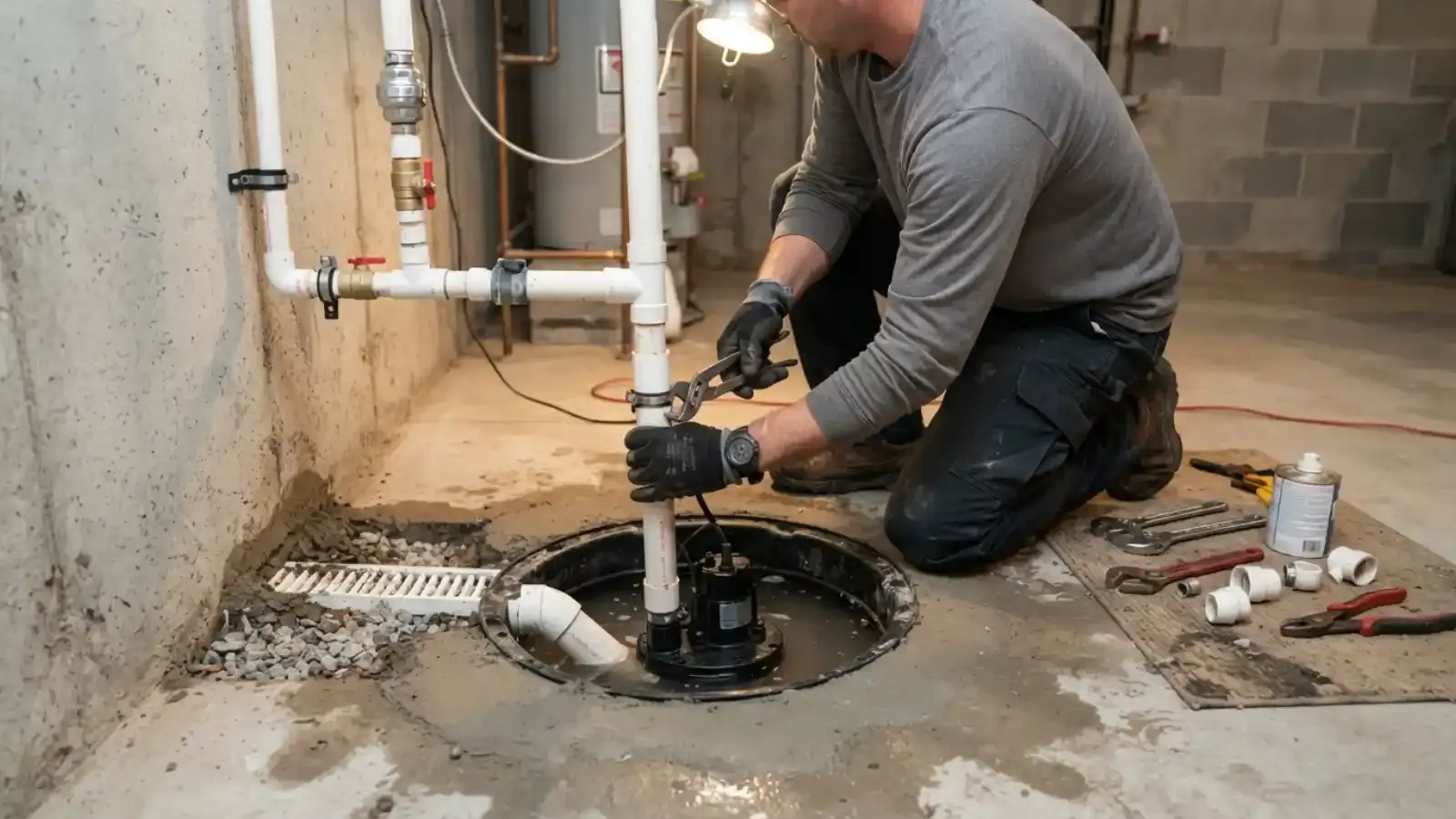
A sump pit collects groundwater from drain tile around the foundation. A float switch starts the pump when the water rises, and the pump sends it through a discharge pipe to the yard. Failure usually comes from a stuck float, a burned-out motor, a clogged intake or a power outage during a storm.
| Failure | Likely cause | Fix |
|---|---|---|
| Pump does not start | Stuck float or tripped breaker | Free the float, reset, or replace the switch |
| Runs but does not move water | Clogged intake or a failed check valve | Clean and replace the valve |
| Runs constantly | Stuck float or high water table | Adjust the float, check discharge |
| Outage during a storm | No backup power | Add a battery backup |
Basement flooding? Call the 24/7 line now.
Call (314) 461-6239New pits and backup systems
Homes without a pit may take in water through the floor slab or at the wall joint. A plumber breaks out a section of slab, sets a basin and connects the drain tile. A backup system adds a second pump on a battery, so the basement stays dry when a storm knocks out power.
Where the water goes matters. The discharge line should run away from the foundation and not toward a neighbor's yard. Many cities regulate it, so check with Ballwin Building Inspections at (636) 227-2129 for local rules. For permanent seepage, see basement waterproofing.
Sump pump or sewer backup
A flooded basement is not always groundwater. If the water comes from a floor drain and smells foul, it is a sewer backup, which needs sewer line cleaning and not a pump. Tell the dispatcher what the water looks like and where it appears.
What changes the price of sump pump work
Cost factors we explain before work starts
- Pump typePedestal and submersible pumps differ in cost and life.
- Backup systemA battery or water-powered backup adds equipment.
- Pit workCutting new concrete and setting a basin is a larger job.
- DischargeA longer or buried discharge line costs more.
- Time of dayEmergency service is priced differently from scheduled visits.
Water that comes up through a floor or a failed pump is often excluded from standard homeowner insurance without an endorsement. Call (314) 461-6239 for your actual number.
Standards note: Where the discharge goes is regulated locally, and the International Plumbing Code (IPC) sets the rules for connections to the drainage system. Never tie a sump discharge into a sanitary sewer without checking local rules. The City of Ballwin lists the International Plumbing Code among its adopted codes, and the Building Inspections Department at (636) 227-2129 can confirm which edition applies.
Sump pump questions from Ballwin homeowners
Yes. Call (314) 461-6239 any hour. A licensed plumber is dispatched for failed pumps and flooding, with same-day appointments when a crew is free.
Often seven to ten years, depending on how hard it works.
If your basement floods when power goes out in a storm, yes. It keeps the pit pumping.
A stuck float or a very wet season is the usual cause. The plumber checks the switch and discharge.
Often yes, though it involves opening part of the floor and patching afterward.
Water from a floor drain with a foul smell is a sewer backup. Clear water at the wall or slab is groundwater.
Sump pump failed? Call the 24/7 line for a licensed plumber.
Call (314) 461-6239